


By: Simrah Safdar Cheema
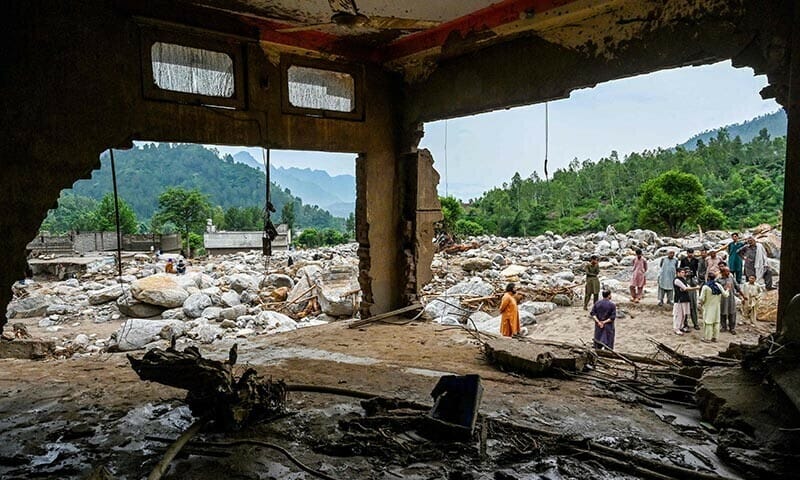
Pakistan’s 2025 monsoon floods, widely linked by climate experts to intensified rainfall patterns associated with climate change, have revealed significant vulnerabilities within the country’s education system, particularly in rural districts.
National assessments reported more than 1,000 fatalities and over 1.5 million people displaced, with economic losses estimated in the hundreds of billions of rupees.
Provinces including Khyber Pakhtunkhwa, Punjab, Sindh, and Balochistan experienced extensive infrastructure damage. Within the education sector, hundreds of schools were damaged or destroyed.
In Khyber Pakhtunkhwa alone, officials reported that approximately 370 schools across 14 districts were affected. Of these, 58 were completely destroyed and 312 partially damaged, with rehabilitation needs estimated to exceed Rs 2 billion. In several flood-hit districts, school buildings were converted into temporary relief camps, leading to prolonged academic disruptions.
The impact on rural communities has been particularly severe.
Floodwaters damaged not only school structures but also access roads, small bridges, and local transport networks. Even where school buildings remained intact, students and teachers were often unable to reach them.
In agrarian districts, the destruction of crops and livestock significantly reduced household incomes. Education officials and community leaders reported that some families resorted to withdrawing children—particularly girls—from school as part of coping strategies.
Displacement further disrupted enrollment continuity, while limited digital infrastructure in rural areas restricted the feasibility of remote learning alternatives.
As a result, rural students experienced compounded learning losses, heightened dropout risks, and widening gender disparities in education access.
Beyond floods, recurring climate-related stressors continue to affect educational outcomes nationwide. Extreme heat waves have reduced classroom productivity and increased health risks in schools lacking adequate ventilation or cooling systems. Drought and water scarcity have compromised water, sanitation, and hygiene (WASH) facilities, discouraging attendance—especially among adolescent girls.
Repeated climate shocks have also diverted public education budgets toward reconstruction and emergency response, limiting investments in quality improvement and long-term planning.
Education experts and policymakers are urging the institutionalization of School-Related Disaster Risk Reduction (SDRR) measures and the development of a climate-resilient education framework.
Proposed measures include upgrading school infrastructure using hazard-resistant design standards, such as elevated foundations in flood-prone areas, reinforced roofing, improved drainage systems, and secure boundary walls. Reconstruction efforts following the 2025 floods are being encouraged to adopt “build back better” principles rather than restoring pre-existing vulnerabilities.
There are also calls for schools, particularly in high-risk rural districts, to establish and regularly update School Safety and Emergency Preparedness Plans. These plans would include evacuation drills, designated safe assembly points, emergency supply kits, and communication protocols linked to early warning systems issued by meteorological authorities.
Teacher training has emerged as another priority. Education specialists recommend capacity building in disaster preparedness, psychosocial support, and continuity-of-learning strategies. The pre-positioning of temporary learning centers in vulnerable districts has also been suggested to reduce instructional downtime during emergencies.
Additional proposals include flexible academic calendars, accelerated learning programs to address instructional losses, and expanded rural digital connectivity through solar-powered information and communication technology (ICT) labs and offline digital content repositories.
At the policy level, provincial education departments are being encouraged to integrate climate risk mapping into school site planning and budget allocations. Strengthening Education Management Information Systems (EMIS) to include climate vulnerability indicators could enable more data-driven resilience planning.
Partnerships with humanitarian agencies and climate finance mechanisms are also being explored to mobilize funding for resilient school construction and green infrastructure initiatives, such as rainwater harvesting systems and tree plantation to mitigate heat stress.
The 2025 floods have underscored that climate change is no longer viewed solely as an environmental concern but as a structural threat to educational equity in Pakistan. Rural communities, already facing socioeconomic challenges, remain at the highest risk.
Education analysts note that transitioning from reactive reconstruction toward proactive, climate-resilient planning—anchored in disaster preparedness, infrastructure reform, teacher training, and digital inclusion—will be critical to safeguarding continuity and quality of education amid increasing climatic uncertainty.