


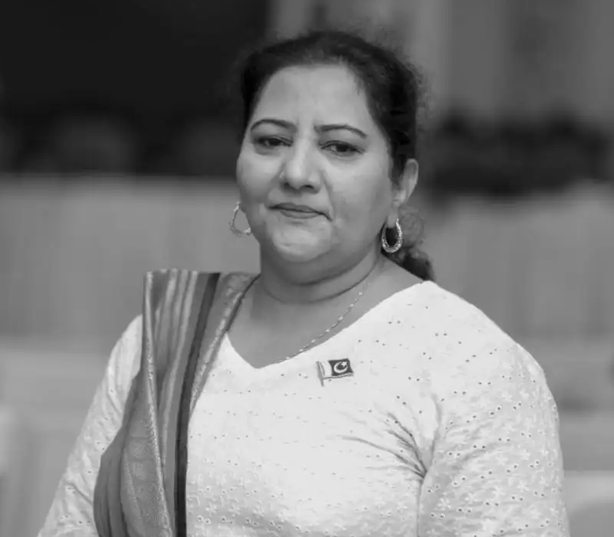
Nabila Feroz Bhatti
The President of Pakistan signed into effect the National Commission for Minorities Rights Act, 2025 on December 16, 2025. After years of push and pull the government moved a bill on the National Commission for Minorities Rights (NCMR) in Senate in January 2025 while Naveed Amir Jeeva of Pakistan People’s Party moved another draft in the National Assembly in the following month, which he later, conceded to merge with the government bill.
Subsequently, interesting and consequential proceeding were observed in the parliament. In March, the sub-committee of Human Rights Committee of Senate convened by Senator Ali Zafar took a keen look, on the proposed bill also incorporating the point of view of the civil society organizations. A delegation of civil society, led by Former Senator Farhatullah Babar of the Human Rights Commission of Pakistan (HRCP) and Peter Jacob of the Centre for Social Justice (CSJ) held a meeting on 19th March and proposed substantive recommendations to Senator Ali Zafar, which he received with an openness. The sub-committee further invited minority MNAs and Senators along with civil society delegation in the meetings held on March 26 and another on April 17. The input from all stakeholders helped considerably to improve the bill, from the legacy of a toothless body that the earlier legal instruments provided. In a leap forward, the Senate passed the bill on April 29.
In the next step, Federal Minister Senator Azam Nazeer Tarar presented this bill in the National Assembly which was passed on May 12 although the PTI and JUI-F expressed reservations regarding the process of approval. However, President sent back the bill on 15 June with some reservations. Pakistan’s Parliament passed the bill in a joint session on December 2, 2025 which was referred to the presidency again and became an act finally.
Hence, a consistent demand of the concerned citizens over establishing a statutory NCMR stands honoured in a democratic manner. Casting an eye on the history of this struggle is instructive, as what should happen at NCMR to be able to make a difference.
Historical Perspective
An ad-hoc minority rights commissions was historically formed under the Federal Ministry for Religious Affairs (MORA) since 1990 which lacked any influence in policy making and resolution of issues related to minorities rights due to inadequate legal basis, limited mandate, lack of independence and insufficient resources.
The Supreme Court, therefore, directed (SMC No. 1 of 2014) the government to constitute a National Council (Commission) for Minorities Rights. Chief Justice Tassaduq Hussain Jilani had elaborated in Para 37 of the judgment to establish NCMR “to monitor the practical realisation of the rights and safeguards provided to the minorities under the Constitution and law” and it should “have the ability to frame policy recommendations for safeguarding and protecting minorities rights for Federal and provincial governments”.
11 years after the verdict was pronounced, the implementation of judgment has suffered neglect on part of the executive, which is subject of discussion for another time, however, the mention of a need for such an institution in the judgment on minorities’ rights added impetus to this national aspiration.
In the following years, three private bills were tabled in the National Assembly by parliamentarian Beelam Hasnain (PPP), Lal Chand Malhi (PTI) and Sanjay Perwani (MQM). The government argued that MORA would bring a comprehensive bill, however, the idea was not materialised.
In 2018, HRCP, CSJ and the Cecil and Iris Chaudhry Foundation filed a petition before the Supreme Court for implementation of the 2014 judgment. The government again chose to notify a non-statutory and toothless commission on May 5, 2020 under an executive order. This symbolic body was in place till April, 2023.
Salient Features of the National Commission for Minorities’ Rights Act, 2025
Apart from constitutional guarantees of equality, and a mention here and there in bits and pieces, there isn’t a legal document that spells out a concrete state policy on minorities’ rights. It is important that for legislation on NCMR this time, the Ministry of Law and Justice (MoJ) in consultation of Ministry of Human Rights (MOHR) addresses the gap.
The provisions of the National Commission for Minorities Rights Act, 2025 provides for a body which satisfies most of the requirements of the UN Paris Principles and the directives of the Supreme Court.
Incorporation of the term “Rights” in the name of the institution is significant because it will help cancel the maneuvering that confuses NCMR with other bodies like one for Protection of Communal Properties. The MOHR will be the affiliate ministry for the commission in consistency with other National Human Rights Institutions (NHRIs).
The Commission will bring two minority members (one female mandatory), one from dominant minorities group from each province and one from the Islamabad capital territory who will be not less than 35 years of age with demonstrable knowledge or practical experience in advocacy of human rights and known integrity. In the definition of minorities, unrecognized minorities like Kalash are also included.
The Chairperson shall be head of the Commission and shall be appointed by the Prime Minister amongst the three nominees selected by the Parliamentary Committee formed by leaders of the both houses from Treasury Benches and opposition benches in parliament.
The Chairperson and every member, other than ex-officio members, shall hold office for a term of four years on full time bases. The Commission will continue to function through its Chairperson and members until their successors are duly appointed.
Three representatives from other NHRIs, one each from National Commission for Human Rights (NCHR), National Commission on the Rights of Child and National Commission on the Status of Women will be incorporated as Ex-officio members to avoid overlap in functions of the commissions and build synergies.
Four representatives, one each from MOHR, MoJ, MORA and the Ministry of Interior will also be the Ex-officio members. Although having ministries’ representatives is not part of NCHR, therefore, the civil society expressed their reservations on this inclusion.
To ensure inclusion of the religious diversity, a Council will be established under this Act which will exercise all powers and perform all functions as assigned by the Commission. The Council will consist of three Hindu members out of which two from scheduled caste, three Christian members, one Sikh member, one Bahai member, one Parsee member, one minority member from ICT, one representative from each Provincial Human Rights or Minorities Affairs Department, and two human rights experts who would be Muslim. The members of the council will be appointed by the Prime Minister on the recommendations of the NCMR.
The NCMR will prepare regular bi-annual report giving a true account of Commission’s performance along with recommendations. The NCMR may at any time prepare special reports on any matters which in its opinion are of particular urgency or importance. The Chairperson will present the report to the President and will forward the report to the Government simultaneously.
The Federal Government will lay the report before each House of the Parliament along with a memorandum indicating the action taken or proposed to be taken on the recommendations of NCMR. In case of non-acceptance of any recommendations, the government shall inform the commission of its reasons. The NCMR will, after presentation to the President, place the report on its official website for information of general public.
As per law, the NCMR will enjoy complete administrative and financial autonomy. It is empowered to conduct an inquiry with powers of a civil court in cases of human rights violations against minorities. It will safeguard and promote social, economic, political and legal rights and interests of minorities, as provided under the Constitution, and in accordance with international instruments ratified by Pakistan.
Establishing NCMR
“It was a long struggle to reach this milestone of legislation for establishing the NCMR. Now only meritorious appointments of the Commissioners should be next target. Women representation is mandatory, however, younger people must be incorporated in the body too,” emphasized MNA Naveed Amir Jeeva who pushed the legislation for NCMR in the National Assembly by repeated motions.
“The passing of the bill for establishing the NCMR is an incredibly important and historical moment for Pakistan’s polity and society. The law passed provides a basis of creating an empowered and autonomous human rights body. Therefore, it brings the huge potential for a democratic inclusion of religious minorities into the policy-making in the country. Moreover, it brings an opportunity for correcting exclusionary societal trends that have been plaguing our system. However, the new Commission to be set up will have to tread its path cautiously, it will have a marathon race to run rather than a short sprint to win”, said Peter Jacob, the Executive Director of Centre for Social Justice, who carried out a massive awareness-campaign over the years and contributed recommendations on the draft bill and discussions.
The government is required under the law to initiate the process of establishing a robust NCMR within two months of passing the law. The appointment of the Chairperson and the members now determines if this effort will bear fruit in upholding the rights and protection of minority communities in Pakistan. Because, only an independent institution with credible commissioners can ensure Pakistan’s promise to fulfil constitutional guarantees and international commitments to change the lives of disadvantaged citizens in particular but also to establish the rights of all, in totality.
Nabila Feroz Bhatti is a human rights activist and columnist. She is Member Working Group at National Commission on the Rights of Child. She can be connected at [email protected] or on X: @NabilaFBhatti
White Post is doing extraordinary work for community.