


By: Dr. Emanuel Adil Ghouri
In times of collective trauma, the human mind often retreats into memory, imagination, and symbolism. Psychologists suggest that suppressed fears and anxieties can surface through dreams, giving voice to emotions that remain unspoken during waking hours. In the aftermath of the Jaranwala tragedy, I found myself overwhelmed by anxiety and uncertainty. Questions haunted me: Were we truly safe? Could a false accusation of blasphemy destroy my life? Could an enraged mob set my village ablaze? Would the police stand between us and chaos?
One night, burdened by these fears, I fell into a deep sleep. Yet even in rest, an unnamed dread remained awake within me—and it carried me into a vivid dream.
I found myself standing at the mausoleum of Muhammad Ali Jinnah in Karachi. Passing through the main gate, I approached his grave. There, I saw an elderly man—dignified, contemplative—embracing the tomb and weeping uncontrollably. His reddened eyes reflected profound sorrow and regret.
He was not only crying but striking his head against the marble walls, wounding himself in anguish.
Unsure whether this was devotion or despair, the journalist within me stirred.
I felt compelled to understand his grief. Gathering courage, I sat beside him and offered him a bottle of water. He accepted it. Encouraged by this small gesture, I began gently wiping the blood from his forehead with my handkerchief. He did not resist.
“May I know your problem?” I asked softly.
He inhaled deeply and replied in a weary tone, “What will you do if you know?”
I introduced myself as a journalist from Sialkot and assured him that I would carry his voice to the public and to the corridors of power. At this, his expression softened. He told me he too belonged to Pasrur Tehsil in Sialkot. That shared connection opened the door to a deeper conversation.
“It feels,” he said, “as though I have been suffering for 78 years. Can all the dust of those years be cleared in one sitting? Still, I must speak. Perhaps my burden will grow lighter.”
His words carried the weight of history. I asked whether he had been a devoted follower or close associate of Quaid-e-Azam. In a frail voice, he replied that he had shared a close bond with him. “Though I was a Christian,” he said, “I considered him my leader.
He believed not in the dominance of a majority over minorities, but in humanity.”
He described traveling from village to village, urging Christians to support the Muslim League. At a time when Tara Singh warned that those who demanded Pakistan would receive only graveyards, he declared that they would face bullets to secure the new homeland. “By the grace of God,” he continued, “with my vote and the support of Christians, Pakistan was created. I was made the first Speaker of the Punjab Assembly.”
Then his voice trembled. He recounted how, in the first session of the assembly of the newly independent country, he was removed through a vote of no confidence led by religious extremists.
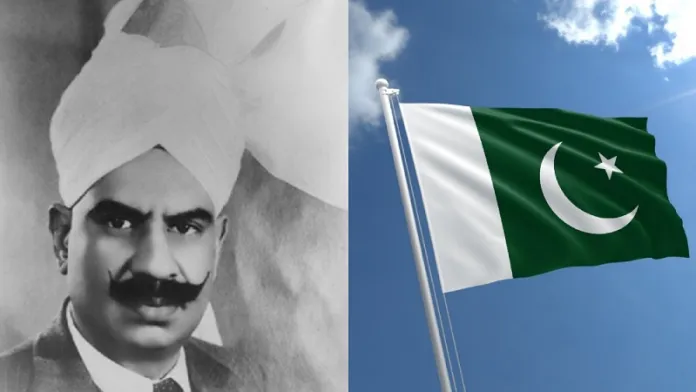
“You are S.P. Singha,” I said.
S. P. Singha did not speak. His weakened voice could not form the words, but he nodded in affirmation.
He resumed, describing how the Christian community had entrusted him with its future during the Pakistan Movement.
“The vote that helped create Pakistan was not merely mine,” he said. “It was the trust of my nation. I believed I was securing for them a homeland where all citizens would be equal—where rights would not be distributed on the basis of religion, race, or color.”
Today, he said, that vision feels distant. When he sees minority settlements attacked by few radicals, individuals imprisoned under false blasphemy accusations, forced conversion, and worship places being set ablaze, he feels a deep sense of responsibility.
Within a year of independence, he along with his family migrated to India.
“Punjab, became part of Pakistan through our votes,” he added.
Responding to another query, he articulated, “I supported Quaid-e-Azam unconditionally. Ours was a politics of service, not bargaining. We did not seek ministries or power in exchange for support. We acted out of loyalty and principle.”
As our walk continued, I posed a final question.
Some individuals today speak of creating a separate homeland, others of carving out a province, and some look to Western countries for resettlement.
Was such a path realistic?
He responded with a measured smile. “Those who think freedom comes easily live in illusion.
Nations are built through sacrifice—through endurance, struggle, and commitment. Do you have leaders ready to sacrifice their lives, their wealth, their comfort for such a cause?
Those who depend on foreign aid cannot build a movement of liberation. If your problems disappear, their influence ends. Some prefer to amplify grievances rather than resolve them.”
At that moment, my phone rang. I awoke from my dream—started, reflective, and strangely grateful. The vision had ended, but the questions it raised lingered, echoing far beyond the silence of sleep.