


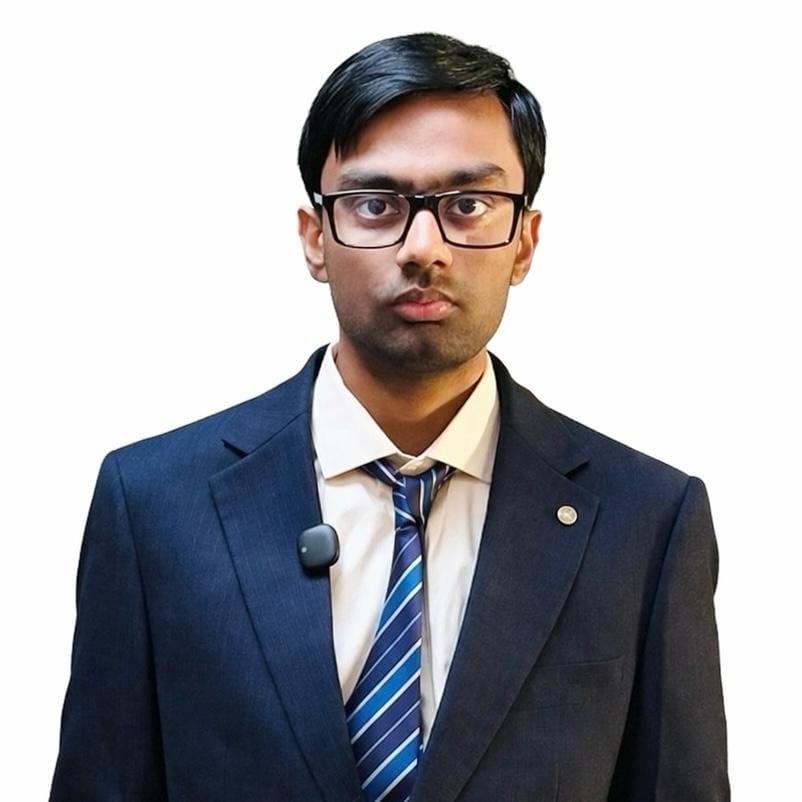
By: Ateer Bhatti
It was an ordinary day as ever until my brother returned home from the gym with an injured leg. While it was not a major injury like a broken bone, it was still serious, leaving him with cuts and a badly bruised bone. We cleaned the wound, disinfected it, wrapped it with bandages, and assumed that after some rest things would improve. Instead, the experience raised questions far bigger than the injury itself. Instead, the experience raised questions far bigger than the injury itself. As we tried to decide what to do next, I realized something important: healthcare is not simply about whether treatment exists. It is also about whether people can realistically understand, navigate, and access that treatment when they need it. Emergency rooms, urgent care centers, walk-in clinics, and primary care appointments all existed as options. Yet deciding what level of care was appropriate, how quickly treatment could happen, what costs might be involved, and where exactly to go created uncertainty of its own.
We scheduled an appointment, but the earliest available date was several days later. During that time, I continued helping clean and re-bandage the wound while watching my brother struggle with constant discomfort. When we finally saw the doctor, we were instructed to complete blood tests and an X-ray before medication could be prescribed. The injury itself was manageable. The uncertainty surrounding treatment was much harder.
This experience caused me to reflect more critically on healthcare systems, particularly the differences between healthcare experiences in the United States and Pakistan. Both systems operate according to different priorities, and both contain strengths and weaknesses. In the United States, extensive testing often allows physicians to make more accurate diagnoses and reduce medical error. However, this precision can also create complex pathways that patients must navigate before treatment begins. In Pakistan, patients often receive immediate attention: wounds are cleaned quickly, medicine is prescribed faster, and patients frequently leave with direct instructions after a single visit. Neither approach is perfect. Speed without sufficient testing creates risks, while excessive complexity creates different problems altogether.
Reflecting on these differences, I realized that healthcare experiences are shaped not only by clinical decisions but also by broader systems that determine access, resources, and service delivery. Pakistan allocates approximately 1.2% of its GDP to healthcare, and many individuals continue to rely on informal providers. As a result, barriers such as limited facilities, poverty, medicine costs, and shortages of healthcare workers remain significant. In contrast, the United States presents different challenges, including insurance complexities, appointment delays, digital systems, and high treatment costs. Despite these structural differences, patients in both contexts often share a similar sense of frustration when accessing care.
My brother’s injury raised a broader question: if healthcare services exist but are difficult to navigate, can they truly be considered accessible? This concern directly relates to Sustainable Development Goal 3: Good Health and Well-Being. During a recent interfaith discussion on SDG 3, Jerusha Shehzad from St. Mary’s College, Lalazar, Rawalpindi stated, “Health is not just the absence of disease. It is the foundation upon which education, dignity, equality and economic progress are built.” Her perspective reframed my understanding of my brother’s experience, highlighting that vulnerability often begins not with illness itself but with barriers within healthcare systems. She further emphasized, “Health is not optional. It is not a benefit reserved for the privileged. It is not a charity bestowed by the powerful. It is a right rooted in every faith, written in every constitution and demanded by every concern, together across faiths, communities and generations.” Her argument underscored the strong link between health and broader social determinants, including poverty, education, gender equality, and social justice. Maggie Donohue from the University of San Diego helped connect this issue to the American context by saying how, “One difference in the US is that the challenge is often less about the absence of services and really more emphasized by the inequitable access to existing ones, particularly due to cost insurance systems and fragmentation and care”. She goes well beyond just hospitals and explains how nature, community, and outdoor leadership programs can support students’ mental and emotional health.
Dr. Sophie Palopoli, an SDGs and interfaith expert, emphasized dialogue, faith, and responsibility in healthcare, defining dialogue as the effort to understand others as they understand themselves and stressing that “all dialogue starts with listening.” Her explanation made me reflect on how healthcare is not only a technical system but also a deeply human process shaped by trust, communication, and values. She connected this to the idea of Caritas, a shared ethic of care found across religious traditions as well as in secular humanitarian approaches, which helped me see how different belief systems can still converge around the importance of human dignity and well-being.
She also highlighted the role of faith leaders in public health, explaining that they often serve as trusted bridges between healthcare systems and communities. This made me think about how people experiencing illness may turn to both prayer and medical care, and how these responses are not necessarily separate but can exist together within a broader support system. Her discussion of healthcare as a human right further deepened my understanding, especially when she noted that in systems like the United States, access is often limited by cost and structural barriers despite formal availability. Overall, her perspective helped me realize that effective healthcare depends not only on medical infrastructure but also on trust, dialogue, and meaningful engagement with the values and lived experiences of the communities it serves.
Finally, Kirn Yochbed’s reflection on youth leadership and mental health reinforces a key conclusion that emerges across these perspectives: SDG 3 is not a privilege but a human right. She underscores the importance of mental health awareness, noting that in contexts such as Pakistan, psychological distress is often normalized, highlighting the need for greater public understanding and engagement. Taken together, these perspectives reveal that SDG 3 cannot be understood merely as the expansion of healthcare infrastructure, but as the quality of access as it is lived and experienced. My brother’s injury illustrates this gap clearly: although medical services were available, the process of navigating care involved delay, uncertainty, and fragmentation that are often excluded from formal definitions of access. Across contexts such as Pakistan and the United States, healthcare inequities emerge not only from differences in resources, but also from how systems are designed and how individuals are required to move through them.
Within this broader framework, interfaith and ethical perspectives deepen the understanding of health as a shared human responsibility grounded in dignity, trust, and care. From Jerusha Shehzad’s rights-based framing of health, to Maggie Donohue’s account of structural inequities, to Dr. Sophie Palopoli’s emphasis on dialogue and Caritas, and Kirn Yochbed’s focus on mental health, a common thread emerges: health is inseparable from justice, communication, and lived experience. Ultimately, the central challenge of SDG 3 is not whether healthcare exists, but whether it is experienced as accessible, equitable, and humane for all.