


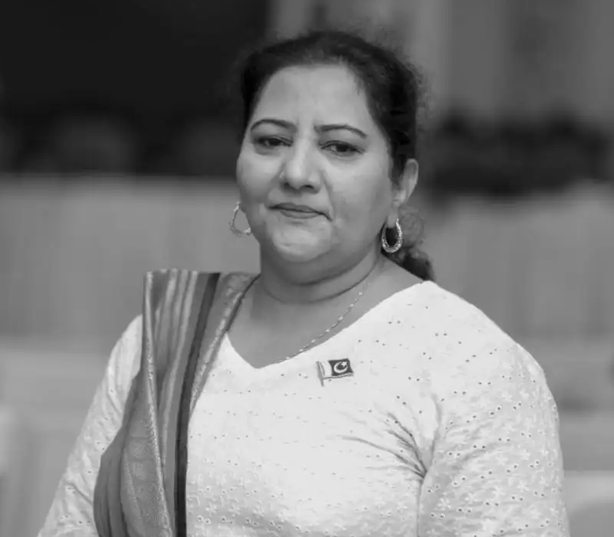
Nabila Feroz Bhatti
On March 30, the Punjab Education, Curriculum, Training and Assessment Authority (PECTAA) through a notification approved books for religious education in schools for students of six minority religions (Christianity, Hinduism, Sikhism, Kalash, Buddhism and Zoroastrianism), which will be implemented from this year.
Pakistan’s religious minorities and civil society have long been demanding that children from minority communities be taught their own religion instead of ethics or Islamic studies in schools. Efforts have been made to achieve this goal, and the government, in response to this demand, began work on it in 2021. The National Curriculum Council approved the preparation of religious textbooks for children of seven religions in 2023; Christianity, Hinduism, Sikhism, Kalash, Buddhism, Zoroastrianism, and Baha’i.
This work was started at the federal level and capable people from different religions were selected from across the country to write textbooks for these religions. People from the same religion were chosen to write text books for each religion. The need for this was felt because previously whatever religion was written about in ethics books, it was written from the majority point of view.
Some of the text books for minority religions were reportedly ready two years ago. Since education is the purview of provinces after the 18th Amendment. Provincial governments were asked to print these books prepared by the National Book Foundation part of the Federal Ministry of Education in their respective provinces and make them available to children to study. However, the provincial governments continued to be lax in this matter.
It has been also heard that one provincial government demanded that the relevant community bear the expenses for the publication of these books, which is illogical. These books should be published in the same manner as all other text books and Islamic studies books are published.
When I posted the notification of the Punjab government on my social media accounts, while this decision was highly appreciated, many questions were also raised. Of course, these questions were already in the minds of those who were advocating for it. So, they had already been part of serious discussions during their advocacy efforts. Several suggestions were under consideration to resolve these questions and concrete propositions were approved.
A user of social media wrote that who will teach these additional subjects? Will teachers from the six minority communities be recruited in every school? The answer is simple that children living in any state should be equal for the state. If infrastructure is provided to children of the religious majority in schools to pursue their religious education, then it should be the case for children of the religious minorities as well.
Danish George, Coordinator for Christian education (Misihi Taaleem), in PECTAA, shared with the media that “teachers will be recruited to provide religious education to minority students in all government schools across the province.” According to the Pakistan Bureau of Statistics, the population of Christians in Punjab is 24.6 million and the population of Hindus is about 228.5 hundred. The remaining are the smaller communities. The government has data for every area. It knows the number of religious minorities in each part of the province. The number of children going to school will be proportional to the population of religious minorities. From this population, teachers can be recruited for children of a specific religion. In practice, children of every religion are not in every school in every part of the Punjab.
Another commenter asked, how many children belonging to religious minorities study in government schools? Will private schools follow this decision? I believe that even if there is one child from a minority community in a school, the protection of his/her basic rights and the assurance of religious freedom are as important as those of 500 children belonging to the majority religion. The state cannot discriminate among children. As far as private schools are concerned, they also work under the rules and regulations of the government. Once this policy is made, they will also follow it.
Another concern was that children from religious minorities would be easily identified and socially targeted in this way. Currently, some minorities’ students are studying Ethics and the other Islamiyat. Both these options are not according to their basic human rights. If they opt Islamiyat, it is not easy for them to learn Arabic verses. If they select Ethics, they are identified too. Secondly, infrastructure for teaching Ethics is not efficient. The books of ethics are written with the perspective of majority religion. There are no specialized teacher for teaching Ethics. It is discriminatory while majority students study their own religion the minorities students study Ethics. Ethics should be compulsory for all students to promote peace and harmony. Minorities’ children should not study Ethics separately from their majority counterparts which implies that other latter do not need a foundation for Ethics.
Another critical question was regarding state role in teaching religious education of any religion in schools? Indeed, Article (14) of the International Convention on the Rights of the Child requires the state to recognize the right of parents or guardians to provide religious guidance to their children in a manner consistent with the evolving capacities of the child. I also firmly believe that religious education should be the responsibility of parents and not of schools or state. But if State is doing it for majority students, same should be the case for minorities’ students without discrimination among children.
The Punjab government has taken a strong initiative regarding religious education of minorities’ children. It is an effort to eliminate discrimination on the basis of religion among children and to create equality. According to Article (2) of the International Convention on the Rights of the Child, the state cannot discriminate among its children on the basis of religion. As majority children receive education of their own religion, minorities’ children should too. A solid strategy is needed to implement this major decision. It should not lead to social isolation of minority children, but rather it should enhance the beauty of religious diversity.
A major challenge for children belonging to religious minorities is that the majority religion is not only taught in Nazra and Islamiyat, but also makes its way into compulsory subjects such as Urdu, English, social studies and general knowledge, almost 40% of the lessons contain Islamic content. Religious minorities’ children are compelled to study Islamic content in compulsory subjects. Whereas Article 22 (1) of the Constitution of Pakistan states, “No person attending any educational institution shall be required to receive religious instructions, or take part in any religious ceremony, or attend religious worship, if such instruction, ceremony, or worship relates to a religion other than his own.” Thus, the Constitution of Pakistan provides protection against citizens being forced to receive religious education of any religion other than their own and to participate in religious rituals and worship. We as a society should uphold this standard to our highest ability, providing room for a rich and multireligious Pakistan.
Nabila Feroz Bhatti is a human rights activist and columnist. She is Member Working Group at National Commission on the Rights of Child. She can be connected at [email protected] or on X: @NabilaFBhatti