


By: Cynthia Sohail
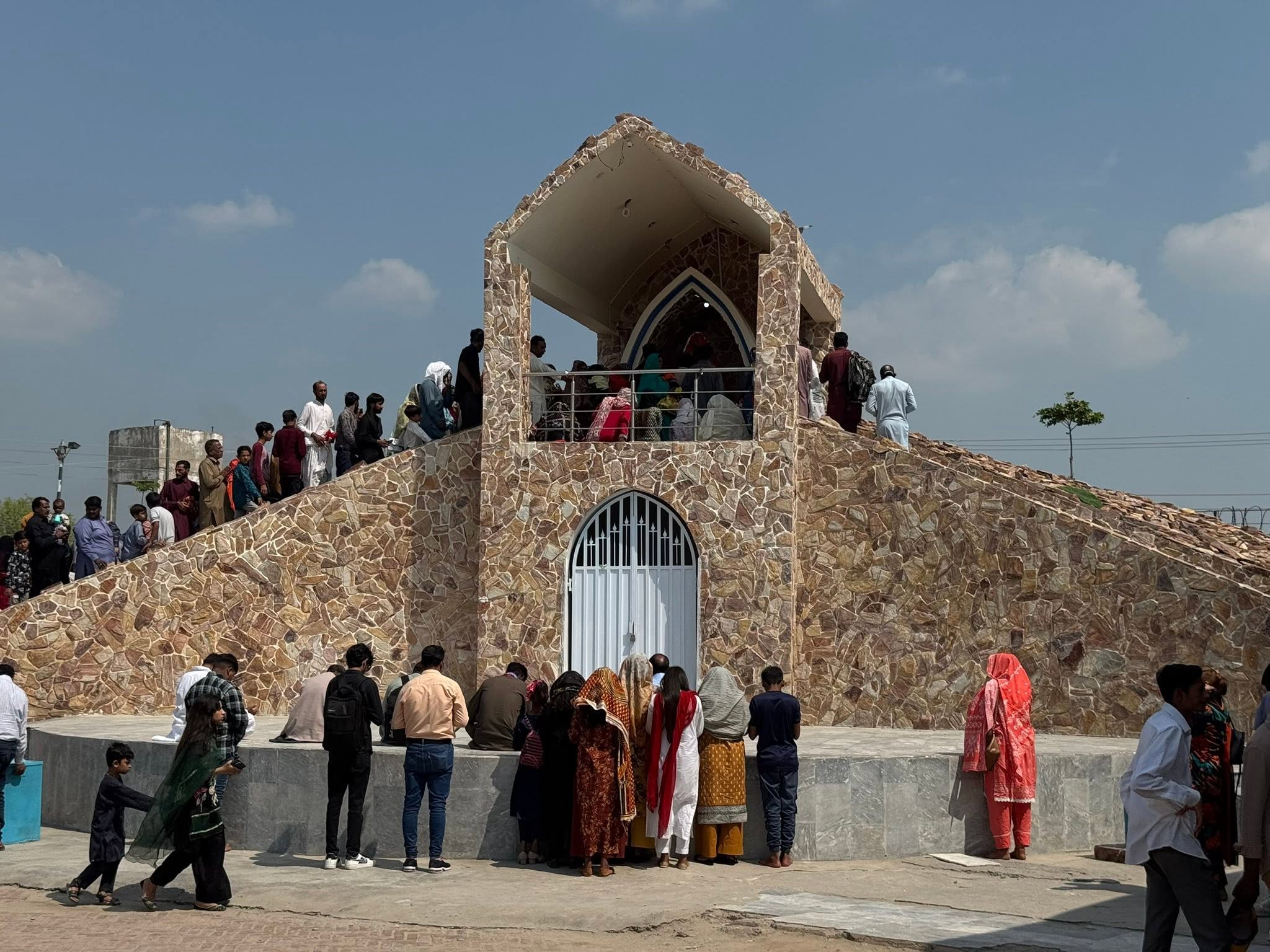
Ziarat-e-Muqaddas Mariam, popularly known as the Mariamabad Mela, is taking place from September 4 to September 6, 2026. Pakistani Roman Catholic Christians from across the country participate in this annual gathering to express their devotion to the Blessed Virgin Mary, the mother of Jesus Christ, toward whom they hold deep love, respect, and devotion.
The three-day Mela brings together people who arrive with their wishes, prayers, and hopes, becoming part of an atmosphere marked by prayer, reflection, thanksgiving, and religious devotion. Although the event is rooted in the Roman Catholic tradition, participation is not limited to Catholics. Christians belonging to other denominations also take part in the spiritual gathering.
The Mela also attracts non-Christians, as well as members of the international community. Pilgrims and visitors arrive through different means, some by bicycle, some on foot, some barefoot, and others by cars and other forms of transportation, bringing their own requests, prayers, and expectations.
Why Is It Called Mariamabad?
For three days in September’s first week, the atmosphere of Mariamabad remains closely connected with prayer. From morning until evening, and throughout the night, prayers, thanksgiving, and religious offerings continue. This naturally raises questions about the origins of the place, its history, and how it came to be known as Mariamabad.
The village was founded in 1892 by Belgian Capuchin Christian missionaries, who purchased land in Sheikhupura District of Punjab to establish a safe settlement for newly converted and marginalized Christians at the time. The village was dedicated to the Virgin Mary and was named Mariamabad after her.
The site was first used in 1949 to celebrate the birthday of Mother Mary. Since then, the place has continued to be associated with the annual celebration of her birthday. Over time, the area surrounding the church became a gathering point for the local community and people from surrounding villages. Gradually, the gathering came to be known as a mela, adopting many elements of the traditional and festive atmosphere associated with rural fairs across South Asia.
Approximately 200,000 to more than one million pilgrims are said to visit Mariamabad annually from different parts of Pakistan. They represent different cultures, communities, denominations, and, in some cases, different faiths. The Mariamabad Mela has consequently developed into the largest and most significant annual Christian Catholic pilgrimage and Mela of its kind in Pakistan.
Its scale and diversity make it an important example of religious and cultural interaction. At the same time, the Mela presents an interesting contrast: on one side is a traditional South Asian mela environment, while on the other, continuous worship, prayer, and religious offerings remain at the centre of the gathering.
This combination can sometimes be misunderstood. The Mela provides space for Pakistani cultural expression through various stalls, including religious and food stalls. Alongside these are lively drumbeats or dhol, traditional dances, and nighttime religious Qawwali or other performances.
Viewed in the broader context of South Asian culture, the combination of religious devotion and cultural celebration is not unusual. Across Pakistan and India, many religious festivals and melas have historically brought together pilgrimage, worship, community interaction, food, music, and cultural activities.
At such gatherings, people may simultaneously express their devotion to God while participating in cultural activities. However, this combination is not universally accepted within Christianity. Some Christian denominations, missionary groups, Protestants, and other religious communities may have different views about the cultural practices associated with the Mela.
There are also concerns surrounding road accidents and other incidents reported during the Mariamabad Mela. Such incidents can create negative perceptions and potentially affect the image of both Pakistan and the Christian community.
In this broader South Asian context, Mariamabad can be compared, in terms of its combination of religious pilgrimage and cultural gathering, with events such as Mela Chiraghan (Festival of Lamps) and the Hinglaj Mata Yatra. These events belong to different religious traditions and have their own distinct beliefs, histories, and practices. Yet they share a broader regional tradition in which religious pilgrimage, community participation, and local cultural activities intersect.
Behind the spiritual and cultural significance of Mariamabad, however, lies a more complicated reality.
Managing a gathering of hundreds of thousands and potentially more than one million—people is an enormous challenge for any country. Local communities, police, civil security authorities, and government institutions must work together to maintain law and order, manage traffic, provide security, and respond to the needs of pilgrims.
The scale of the gathering is also one of the reasons the Ziarat-e-Muqaddas Mariam, or Mariamabad Mela, has become so prominent. Its distinctive combination of religious devotion, cultural activities, prayer, and community participation has made it one of the most famous and largest Christian melas in Pakistan.
Over the years, the prayers and testimonies of countless pilgrims have also become part of the religious memory of the community. Many participants regard their experiences as signs of blessings and miracles. Such personal testimonies have contributed to the continuation of the Mariamabad pilgrimage as a religious tradition passed from one generation to another.
As Mariamabad continues to grow, effective leadership, planning, and management will become increasingly important. The objective in the coming years should not necessarily be to remove the cultural character of the Mela, but to ensure that the entire experience becomes safer, better organized, more respectful, and more representative of the values of faith and community.
Strong leadership can help preserve the traditions that pilgrims and local communities value while simultaneously addressing practical challenges, including security, traffic management, sanitation, crowd control, emergency response, and the overall experience of visitors.
The 2026 Mariamabad Mela is therefore more than a three-day religious gathering. It reflects aspects of Pakistan’s Christian heritage, South Asian culture, religious diversity, and the enduring strength of community traditions.
Perhaps the greatest hope is that Mariamabad will continue to remain a place where people arrive with prayers and return with memories, not only as an important Christian pilgrimage, but also as an example of how faith, culture, community, and religious diversity can coexist in Pakistan.