


News Desk
ISLAMABAD, 21 May 2026:
Minority rights organizations in Pakistan have urged the federal government to introduce broad constitutional reforms aimed at strengthening protections for religious minorities, women, and children as part of the proposed 28th Constitutional Amendment Bill.
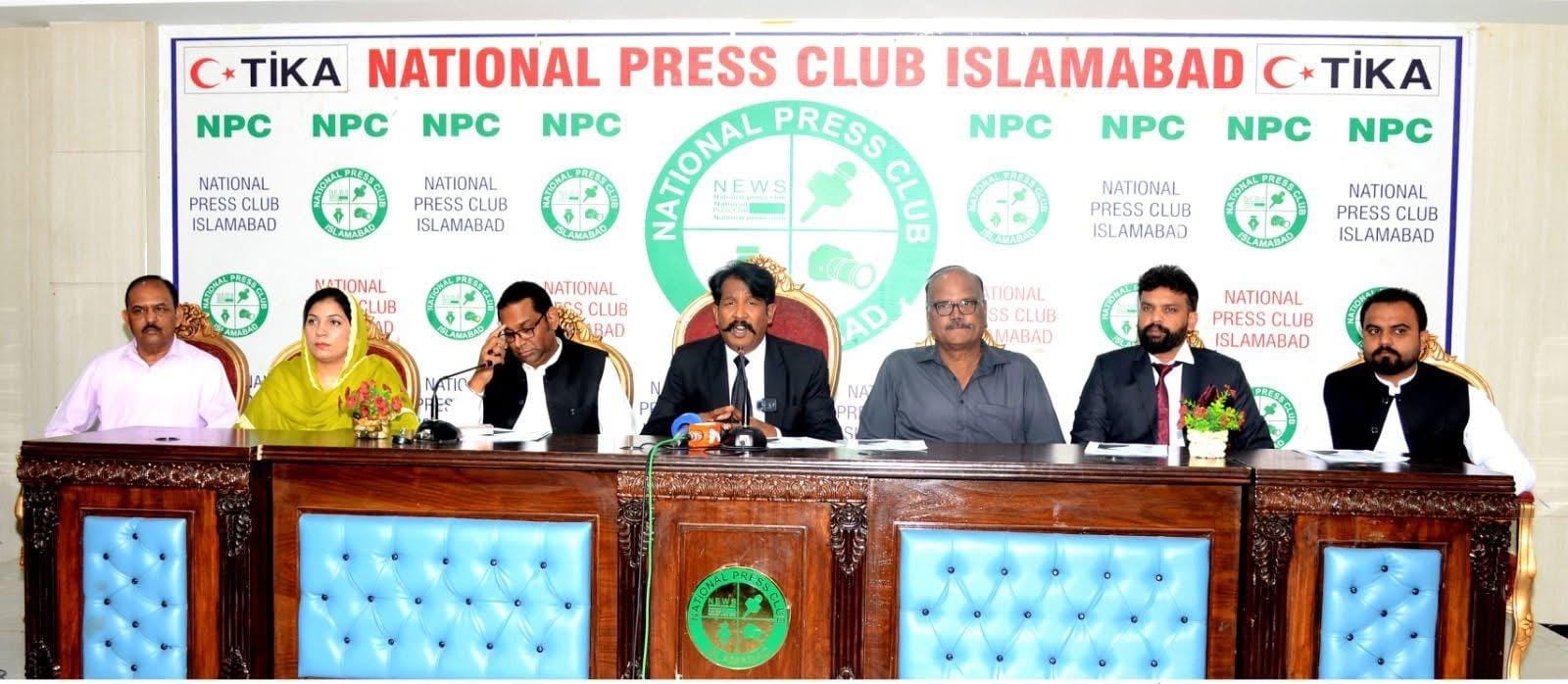
At a press conference held at the National Press Club in Islamabad, leaders of the Minorities Alliance Pakistan and allied groups presented a reform package that included changes to constitutional provisions related to political representation, religious freedom, and child protection.
Speaking at the event, MAP Chairman Akmal Bhatti said Pakistan could not fully function as a pluralistic democracy while constitutional provisions continued to restrict non-Muslims from holding the offices of President and Prime Minister and while minority communities lacked direct democratic representation.
Bhatti stated that the proposed reforms were intended to ensure equality before the law and equal opportunities for all citizens. He argued that existing constitutional and legal structures should adequately protect children from forced religious conversion and child marriage.
Among the proposals presented by MAP was a recommendation to prohibit the religious conversion of individuals under the age of 18 unless free and informed consent is recorded before a judicial magistrate.
MAP further proposed amendments to Articles 51 and 106 to introduce direct elections for seats reserved for non-Muslims and women in the National Assembly and provincial assemblies. Another proposal called for a constitutionally guaranteed minimum five percent quota for religious minorities in federal and provincial government jobs and public educational institutions through amendments to Article 27.
Representatives of the organization stated that the proposals are consistent with constitutional guarantees related to religious freedom, equality, family protection, and minority rights under Articles 20, 25, 35, 36, and 37 of the Constitution. They also argued that the reforms align with Pakistan’s obligations under international agreements, including the International Covenant on Civil and Political Rights (ICCPR), the Convention on the Rights of the Child (CRC), and the Convention on the Elimination of All Forms of Discrimination Against Women (CEDAW).
Several minority rights leaders addressed the press conference, including Samson Salamat, Tahir Naveed Chaudhry, and Robin Daniel.
Minority rights activist, Joseph Janssen also expressed support for the initiative. He described the proposed reforms as an important step toward strengthening constitutional equality and improving protections for vulnerable communities in Pakistan.
Janssen said the proposals addressing forced conversion and democratic representation could contribute toward greater equality of citizenship under the law. He also linked the reforms to international commitments, which requires implementation of key human rights conventions.
According to Janssen, reforms related to child marriage should include stricter age verification procedures before marriages are registered.
He suggested that authorities require documentary proof of age, including Computerized National Identity Cards (CNICs), NADRA-issued birth certificates, and other officially recognized records.
He further recommended that courts order medical examinations by government-appointed medical boards in cases where age documentation is disputed or unavailable, while ensuring the dignity and privacy of minors.
Janssen stated that uncertainty in age determination should be interpreted in favor of treating the individual as a child.
MAP also called on the Parliamentary Committee on Constitutional Reforms to conduct broader consultations with minority communities, legal experts, and civil society organizations before finalizing the amendment package.
Bhatti said that constitutional reforms developed without meaningful participation from affected communities could deepen feelings of exclusion.
The proposed reforms are expected to generate political and public debate as discussions continue over the 28th Constitutional Amendment Bill in Pakistan.